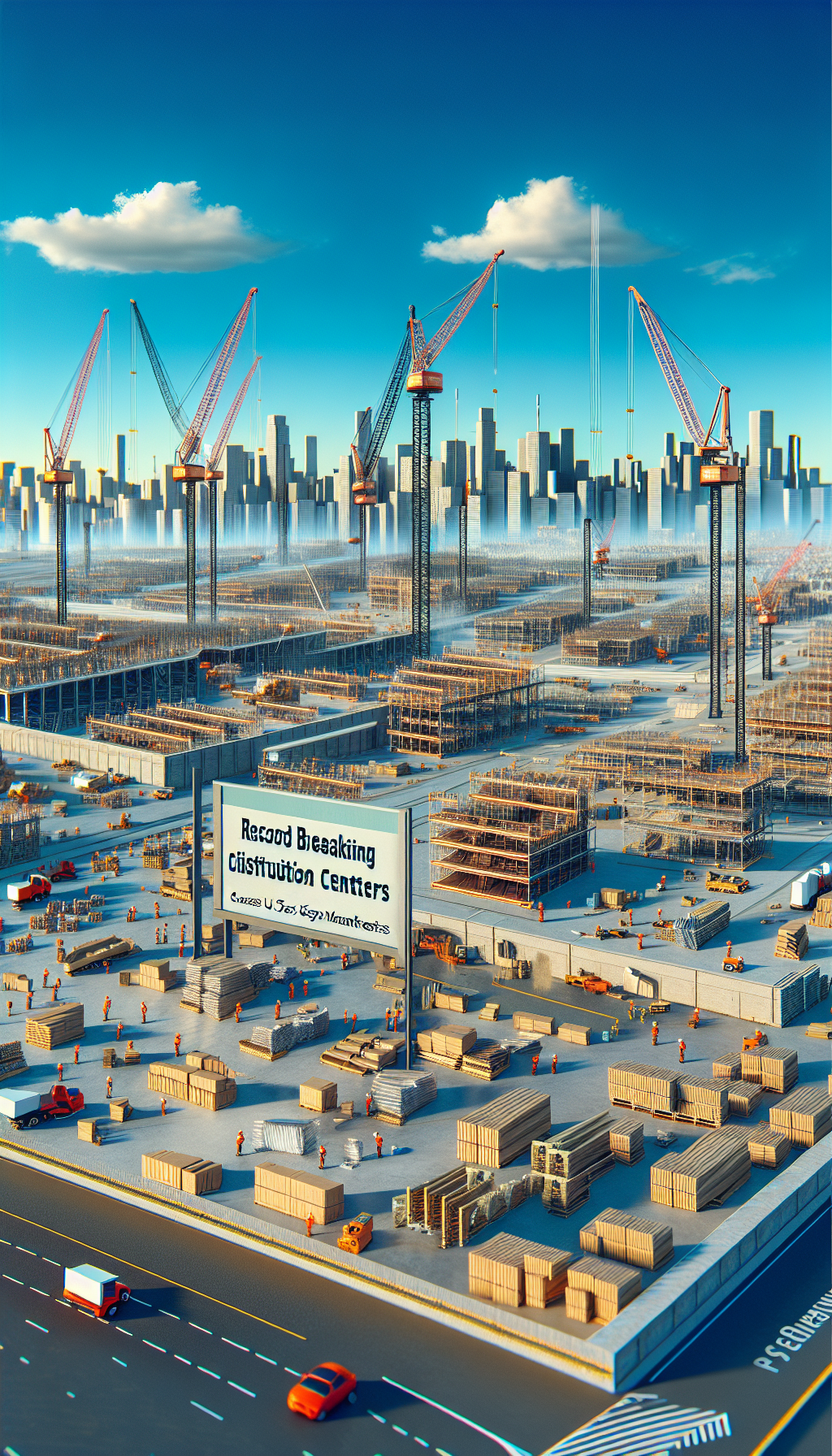

Record-Breaking Construction of Distribution Centers in Key US Markets
Overview of Distribution Center Growth
In recent years, the U.S. has witnessed an unprecedented boom in the construction of distribution centers, particularly in key markets across the country. These modern facilities are vital for meeting the surge in demand for e-commerce, driven by shifts in consumer behavior and the increasing need for efficient supply chain management. As the logistics landscape evolves, the demand for strategic locations for distribution centers continues to accelerate.
Key Markets Leading the Construction Surge
-
California
California remains at the forefront of distribution center development, particularly in regions like Los Angeles and the Inland Empire. The strategic location offers proximity to major ports, such as the Port of Los Angeles and Port of Long Beach, which are essential for international shipping. With a vast population and a robust economy, the demand for rapid delivery services fosters continuous investment in automated and high-capacity distribution centers. -
Texas
Texas, particularly Dallas-Fort Worth and Houston, has experienced a surge in distribution center construction due to its favorable business environment, abundant land, and a growing workforce. The state’s central location allows for efficient distribution across the U.S., while tax incentives further attract logistics companies. Recent data indicates that Texas has become one of the leading states for fulfillment centers, effectively supporting retailers’ needs for fast shipping. -
Illinois
The Chicago metropolitan area serves as a major logistics hub due to its extensive transportation network, including highways, railroads, and airports. With the construction of several large-scale distribution centers, the area supports a diverse range of industries, enhancing its reputation as a vital logistics center. Companies increasingly seek facilities here for their strategic position within the Midwestern market, enabling quick access to major urban centers. -
Florida
Florida is rapidly becoming a significant player in the distribution center market, particularly in regions like Orlando and Miami. The state’s growing population and favorable climate make it an attractive destination for businesses. Furthermore, Florida’s economic growth, coupled with the expansion of e-commerce, drives the demand for modern distribution facilities that cater to consumers across the Southeast.
Innovations in Distribution Center Design
To cope with the increased demand and expectations for quick delivery, companies are investing heavily in innovative designs and technologies for new distribution centers. Key trends include:
-
Automation and Robotics
The implementation of automation technologies such as robotics and AI-powered solutions can greatly enhance efficiency, allowing quicker order processing and reduced labor costs. Automated storage and retrieval systems (AS/RS) help optimize space and improve inventory management. -
Sustainable Practices
As environmental concerns gain prominence, many new distribution centers are being designed with sustainability in mind. This includes energy-efficient systems, solar panels, and eco-friendly materials, contributing to reduced carbon footprints and meeting regulatory standards. -
Flexible Space Design
Modern distribution facilities are increasingly adopting flexible layouts that can be easily modified to accommodate changing business needs. Considerations for modular designs allow companies to expand or contract operations without significant renovations, maximizing investment returns.
Economic Implications of New Distribution Centers
The ongoing construction of distribution centers has numerous economic benefits for local and regional economies. Here’s an analysis:
-
Job Creation
The building of distribution centers generates thousands of jobs, not merely in construction but also in long-term employment opportunities for operations, management, and logistics roles. This economic activity contributes to local job markets and stimulates wage growth in adjacent sectors. -
Real Estate Dynamics
The demand for space for distribution centers has led to increased interest in commercial real estate. Property values in strategic locations are rising, reflecting the growing importance of logistics in urban planning. Communities are adapting to meet the needs of these facilities, from infrastructure improvements to zoning adjustments. -
Supply Chain Resilience
Enhancing local distribution capabilities improves the overall resilience of supply chains. Recent disruptions from global events have highlighted the need for localized solutions that can respond quickly to demand fluctuations, making strategically placed distribution centers invaluable.
Challenges Facing Distribution Center Development
While the growth of distribution centers offers numerous advantages, it also presents several challenges that developers and investors must address:
-
Infrastructure Strain
The rapid increase in distribution center construction can strain existing infrastructure, resulting in traffic congestion and increased wear on local roads. Strategic planning and investment in infrastructure improvements are essential to support growth effectively. -
Labor Shortages
The logistics industry is currently grappling with labor shortages, particularly for warehouse and distribution roles. As demand for e-commerce fulfillment rises, attracting and retaining skilled labor becomes more crucial. Companies are increasingly investing in training programs and incentives to build a reliable workforce. -
Regulatory Hurdles
Navigating local, state, and federal regulations can be complex and time-consuming. Often, developers face zoning restrictions, environmental assessments, and building codes, which can delay projects and increase costs.
Future Outlook for Distribution Centers
The future of distribution center construction in the U.S. looks promising, driven by ongoing advances in technology and a clear demand for logistics solutions that support e-commerce growth. As companies reassess supply chain strategies, the focus on strategic locations, automation, and sustainability is likely to shape the industry landscape.
Investment in technology and infrastructure improvements will be crucial for meeting evolving consumer expectations. With the continuous evolution of trade patterns and market dynamics, distribution centers will play a pivotal role in future economic resilience and growth. As companies aim to meet the challenge of swift delivery times and operational efficiency, record-breaking construction trends will likely expand into new markets across the country.
The record-breaking construction of distribution centers signifies not only the changing logistics landscape but also a shift in consumer behavior and expectations. The strategic importance of these facilities in facilitating efficient supply chain operations will be pivotal in future industrial growth, with local and national economies benefiting from these advancements.
