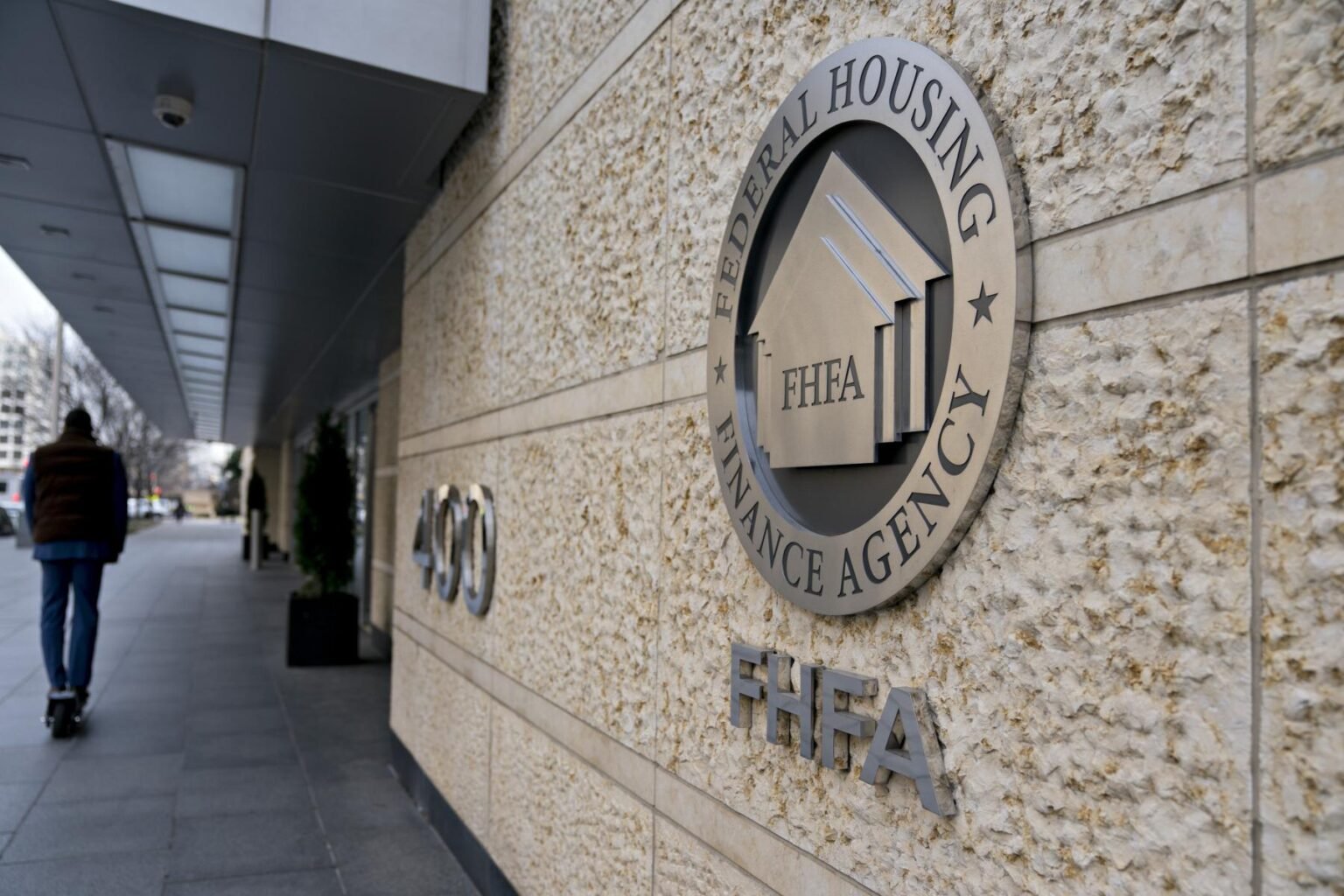

The Federal Housing Finance Agency (FHFA) is expected to publish the 2027 conforming loan limit within days. The figure decides the largest mortgage Fannie Mae and Freddie Mac can buy, and therefore where cheaper conforming financing ends and jumbo lending begins. Several big lenders are already lending above today’s cap on a bet that the new number will be higher. Here is how the limit is set, what the latest data point to and what buyers and investors should do before the official release.
Key takeaways
- The 2026 baseline limit for a one-unit home is $832,750, with a high-cost ceiling of $1,249,125.
- FHFA had not announced the 2027 limit as of November 23, 2026; last year it did so on November 25.
- Rocket, CrossCountry, UWM and Pennymac are already using unofficial 2027 limits of $845,000 to $850,000, at their own risk.
How the 2027 conforming loan limit is calculated
The Housing and Economic Recovery Act of 2008 (HERA) requires FHFA to adjust the baseline limit each year in line with the change in average U.S. home prices. In practice, FHFA applies the year-over-year change in its seasonally adjusted, expanded-data House Price Index (HPI) from the third quarter of one year to the third quarter of the next. If prices fall, the limit stays flat rather than dropping.
For 2026, that formula produced a 3.26% increase, lifting the baseline by $26,250 to $832,750. FHFA released the figure on November 25, 2025, the same day as its third-quarter HPI report – a pattern most analysts expect to be repeated this year.
| 2026 limits (one-unit property) | |
|---|---|
| Baseline, most of the U.S. | $832,750 |
| High-cost area ceiling (150% of baseline) | $1,249,125 |
| Alaska, Hawaii, Guam, U.S. Virgin Islands baseline | $1,249,125 |
| Increase vs. 2025 | 3.26% (+$26,250) |
| Announced | November 25, 2025 |
| Source | FHFA |
High-cost areas
In expensive markets, the limit can be higher. Where 115% of the local median home value exceeds the baseline, the county limit is set at that level, capped at 150% of the baseline. Coastal metros in California and the Northeast, as well as resort and island markets, typically sit at or near the ceiling, so any baseline increase lifts their limits too.
What the data suggest
Home-price growth has cooled. FHFA’s own releases show its index up 2.1% year over year in the second quarter of 2026 and 2.4% year over year in August 2026. The third-quarter reading, which actually drives the 2027 limit, had not been published at the time of writing.
Simple arithmetic shows the range in play. A 2% increase would put the baseline near $849,400; a 2.5% increase would put it near $853,600. Both are below last year’s 3.26% gain, which is why most forecasts point to a smaller dollar step-up than in recent years.
Lenders moving early
| Lender | Unofficial 2027 limit (one-unit) | Announced |
|---|---|---|
| Rocket Mortgage | $845,000 | September 10, 2026 |
| CrossCountry Mortgage | $845,000 | September 10, 2026 |
| UWM | $847,440 | September 16, 2026 |
| Pennymac | $850,000 | September 16, 2026 |
These are lender programmes, not government limits. Fannie Mae and Freddie Mac cannot purchase loans above the current cap until the new limit takes effect, typically on January 1. Until then, the lender carries the risk that FHFA’s number comes in lower than the one it used.
What it means for investors
For buyers near the line, the difference between a conforming and a jumbo loan can mean a different rate, down-payment requirement and underwriting standard. A higher limit modestly widens access to conforming credit for move-up buyers and small investors buying one- to four-unit properties, which also have their own, higher limits. For lenders and mortgage investors, early limits are a competitive tool with a pricing risk if the official figure undershoots.
Foreign buyers should note that eligibility for agency loans depends on residency and documentation, not just loan size, and that federal policy on who may buy homes is shifting – see our explainers on Treasury’s institutional investor home rule and the HUD Section 214 final rule. Our guide to U.S. mortgage types explains how conforming and jumbo loans compare.
What to watch
- FHFA’s third-quarter HPI release and conforming loan limit announcement, expected in late November.
- The county-level table for high-cost areas, published alongside the baseline.
- The FHA single-family limits, which are derived from the conforming figures and usually follow shortly after.
FAQ
What is the conforming loan limit for 2026?
$832,750 for a one-unit property in most of the U.S., and up to $1,249,125 in designated high-cost areas.
Has FHFA announced the 2027 limit?
Not as of November 23, 2026. FHFA usually publishes the new limits in late November, alongside its third-quarter House Price Index.
Can I get a 2027-size conforming loan today?
Some lenders offer loans up to $845,000–$850,000 under unofficial 2027 limits, but they hold those loans at their own risk until the official limit takes effect.
Official source
This article is for general information only and does not constitute legal or investment advice.
